
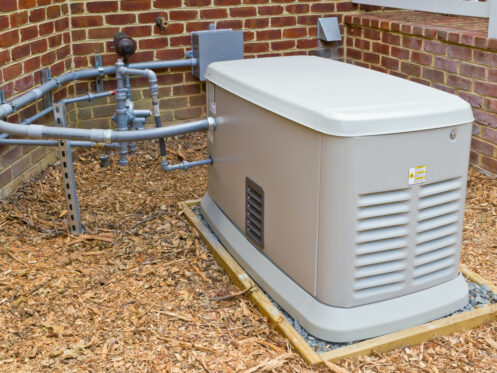
A power outage can affect much more than your lights. Refrigerated food may spoil, medical equipment may stop working, and heating or cooling equipment may become unavailable. A backup generator can help keep selected household systems operating until utility power returns.
Homeowners generally choose between portable generators, standby generators for essential circuits, and larger standby systems designed for broader coverage. The right option depends on your power priorities, fuel access, electrical demand, and property layout.
What Backup Generator Options Are Available?
Each type of generator offers a different level of convenience, coverage, and installation support.
Portable Generators
Portable generators provide temporary power to a limited number of appliances or devices. They require manual setup and must remain outdoors, away from doors, windows, and attached garages because they produce carbon monoxide.
These generators may support basic needs during an occasional outage. However, they do not provide the automatic operation or permanent electrical connections of a standby system.
Essential-Circuit Standby Generators
An essential-circuit standby generator supplies power to a selected group of circuits. The exact coverage depends on the generator size and the home’s electrical system.
- Refrigerators and freezers
- Interior lighting
- Medical equipment
- Sump pumps
- Selected heating or cooling equipment
- Essential kitchen appliances
This approach can help maintain important household functions without supporting every circuit at once.
Larger Standby Generator Systems
A larger standby generator may support more of the home. Some systems can operate many everyday appliances and electrical circuits, but coverage depends on generator capacity, fuel supply, the transfer switch, and total demand.
A professional load evaluation helps determine which items can operate safely at the same time.
How Does a Standby Generator Work During an Outage?
A standby generator is permanently installed outside the home and connected to the electrical system through an automatic transfer switch.
When utility power fails, the transfer switch detects the interruption and separates the home from the electrical grid. The generator then starts and supplies electricity to its designated circuits. After utility service returns, the system transfers the home back to grid power and shuts down the generator.
This automatic process removes the need to connect extension cords or manually start the equipment during an outage. Because the generator connects directly to the home’s electrical system, qualified electricians should complete the installation.
How Do You Choose the Right Generator Size?
Generator sizing begins with deciding which systems you want available during an outage. Some homeowners focus on refrigeration, lighting, medical devices, and pumps. Others want enough capacity to support a wider range of appliances and comfort equipment.
An electrician must consider both running wattage and the additional power some equipment needs when it starts. Operating several high-demand appliances at the same time may require more capacity than supporting a small group of essential circuits.
A generator that is too small may not handle the intended load. A professional assessment can match the equipment to your electrical panel, household priorities, and preferred level of coverage.
Which Generator Fuel Options Should You Consider?
Natural gas and liquid propane are common fuel options for residential standby generators.
Natural gas may be convenient for homes already connected to a utility gas line. However, the available gas pressure and meter capacity must be able to support the selected generator.
Propane may be suitable for properties without natural gas service. Tank size, placement, and fuel availability can affect how long the generator operates between deliveries.
Fuel piping, storage, generator capacity, and equipment placement should all be evaluated before installation.
Why Is Backup Power Relevant in Tennessee and Kentucky?
Thunderstorms, straight-line winds, falling trees, ice, and winter weather can damage utility equipment throughout Tennessee and Kentucky. These events may cause outages that last from a brief interruption to an extended period.
Federal energy data shows that customers in both states have experienced longer average outage times when major weather events are included. Statewide figures cannot predict what will happen at a specific property, but they demonstrate why many homeowners include backup power in their emergency planning.
A generator cannot prevent a utility outage. However, a properly selected system can help maintain important household functions while utility crews complete repairs.
Choose Professional Generator Installation and Maintenance
Selecting a standby generator involves more than choosing a brand or wattage. Proper planning may include a load evaluation, transfer-switch selection, fuel review, equipment placement, electrical connections, and ongoing maintenance.
Founded in 1980, E&W Electrical Solutions serves homeowners throughout Western Tennessee and Western Kentucky. As a Generac Power Pro Premier Dealer, we provide professional home generator installation and maintenance based on each property’s electrical needs.
Our electricians can help you compare essential-circuit and broader-coverage systems, review fuel considerations, and select equipment that fits your priorities.
Prepare your home for future outages by contacting E&W Electrical Solutions to discuss a professionally installed backup generator in Western Tennessee or Western Kentucky.